Patterns of Reward Timing Guiding Shifts Between Standard and Specialty Draw Mechanics in Live-Chat Environments
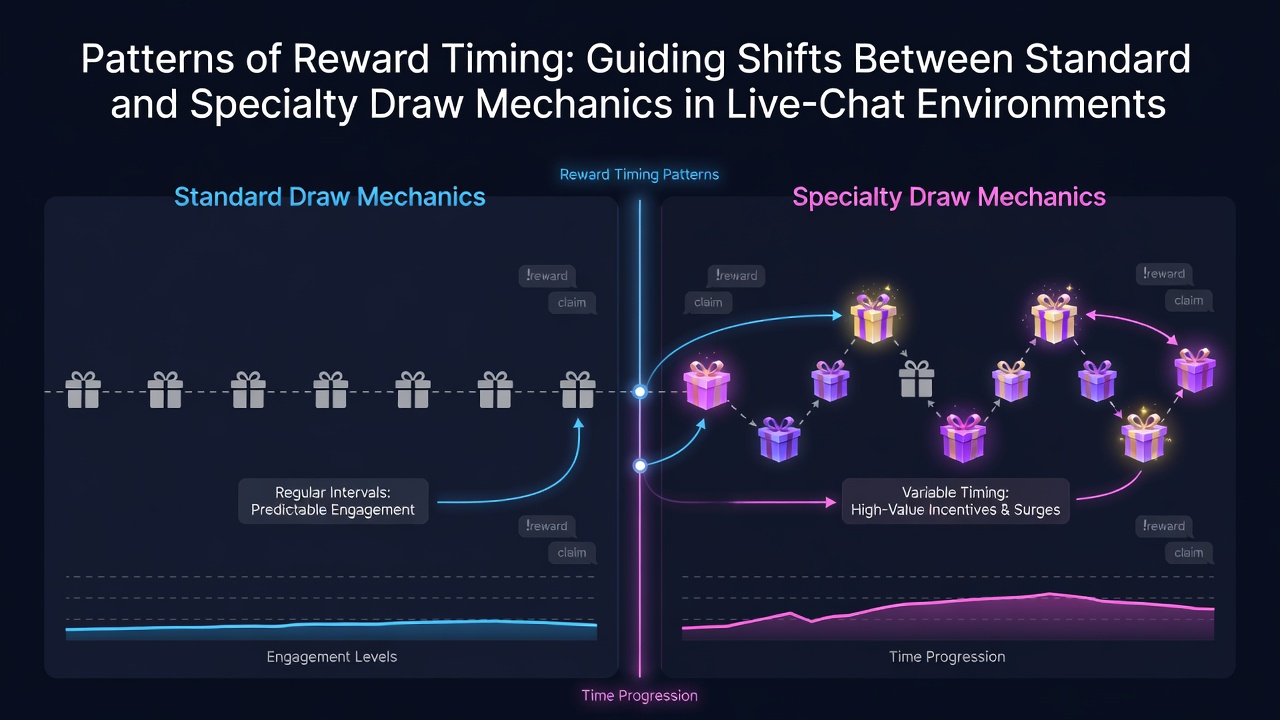
Live-chat environments host a range of draw mechanics where reward timing shapes participant movement between standard formats and specialty variants, and operators track these transitions through session data collected across multiple platforms. Standard draws typically feature fixed intervals with predictable prize structures, whereas specialty draws introduce variable timing, themed elements, and adjusted reward frequencies that alter engagement sequences. Research indicates that participants often migrate when reward intervals in one category align more closely with observed payout patterns in the other.
Core Mechanics in Chat-Based Draw Systems
Standard draw mechanics operate on set schedules that release results at consistent intervals, allowing users to anticipate outcomes within established timeframes, while specialty draws adjust these intervals based on participation thresholds or external triggers such as cumulative chat activity. Data collected from platforms operating in 2025 and early 2026 shows that shifts occur most frequently when specialty rewards appear within shorter windows than standard offerings. Observers note that chat logs reveal clusters of activity immediately following these compressed reward cycles, prompting users to adjust their selection patterns accordingly.
Timing differences extend beyond simple intervals because specialty mechanics incorporate conditional triggers that activate additional reward layers once specific chat milestones are reached. Standard formats maintain steady progression without such conditions, which creates measurable divergence in user retention across sessions. Figures from industry monitoring services reveal that platforms adjusting specialty timing by as little as thirty seconds recorded increased migration rates during peak evening hours in several regions.
Observed Patterns and Timing Data
Analysis of session records demonstrates recurring sequences where participants begin in standard draws and transition to specialty formats after experiencing delayed rewards in the initial category. Conversely, returns to standard mechanics follow extended specialty sequences that stretch beyond expected intervals. These bidirectional movements follow identifiable rhythms tied directly to reward delivery points rather than external promotional factors.
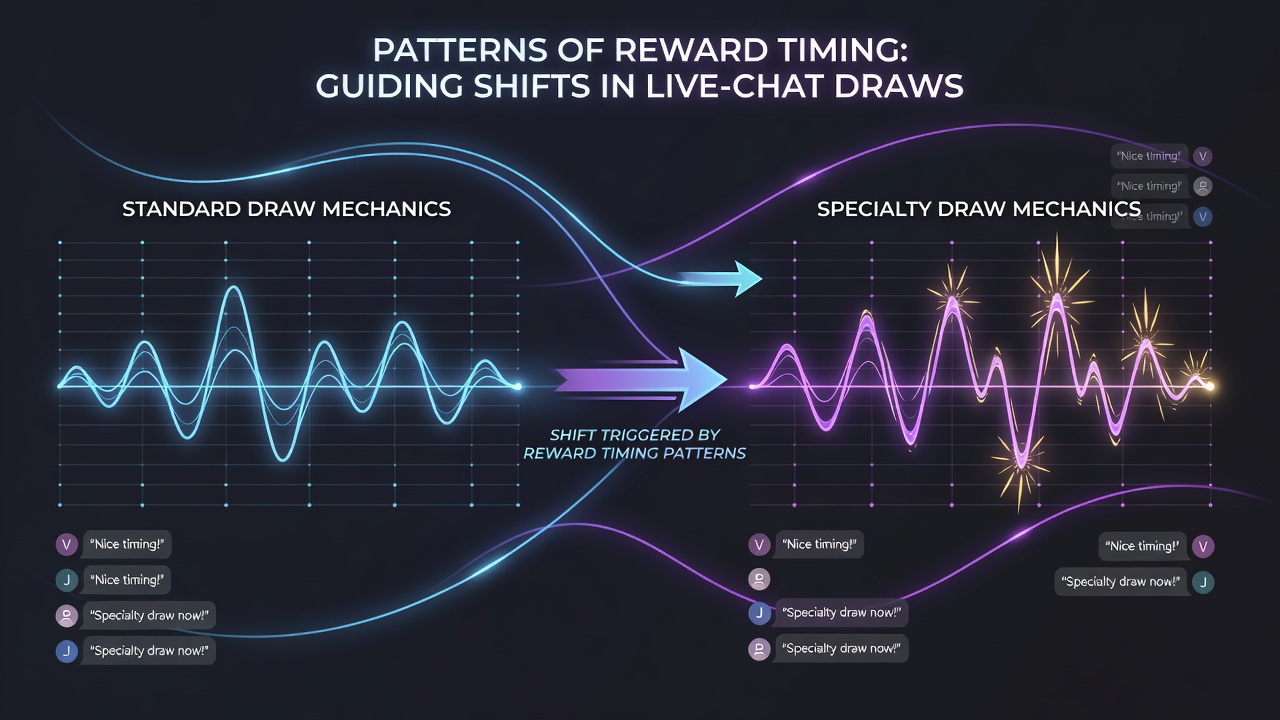
July 2026 updates to several monitoring dashboards incorporated finer timestamp granularity that highlighted micro-shifts occurring within single chat threads. Operators using these refined metrics identified that specialty draws releasing rewards between eight and twelve minutes after initiation captured higher continuation rates than those extending past fifteen minutes. Standard draws maintained steadier participation when intervals remained under ten minutes regardless of prize size variations.
Influences on Participant Behavior
Chat environments amplify timing effects because visible messages from other participants create social reinforcement around recent reward events. When specialty draws deliver outcomes shortly after standard draws conclude, users frequently reference the proximity in real time, accelerating collective movement toward the faster cycle. Platforms that log these references alongside timestamp data confirm that coordinated timing increases the likelihood of sustained engagement across both categories within the same session.
According to reports published through the Australian Gambling Research Centre, timing alignment between draw types correlates with extended overall session lengths in chat-enabled environments. Separate findings from the Canadian Centre for Gaming Research indicate similar patterns across North American platforms, where reward proximity serves as a stronger predictor of category shifts than prize magnitude alone.
Platform Adjustments and Measurement Approaches
Operators refine timing parameters through iterative testing that measures transition frequency after each adjustment. Specialty draws scheduled to release rewards immediately following standard draw completions show elevated cross-category participation, whereas staggered releases that create longer gaps produce more isolated activity clusters. These adjustments rely on aggregated chat and transaction timestamps rather than individual user profiles.
Measurement protocols introduced in mid-2026 emphasize interval mapping across consecutive draws, allowing operators to quantify how many seconds separate reward events and correlate those gaps with observed migration volumes. Data sets spanning multiple jurisdictions demonstrate consistent directional movement when gaps fall below established thresholds, regardless of regional regulatory differences.
Conclusion
Reward timing functions as the primary variable directing movement between standard and specialty draw mechanics within live-chat settings. Documented patterns show that interval compression in one category reliably precedes measurable increases in participation in the other, while extended gaps produce the reverse effect. Continued refinement of timestamp tracking through 2026 provides clearer mapping of these transitions across platforms and regions.